Thursday, March 12, 2026

🌿 The Gospel: Good News for All Creation


The Word became flesh


From earth to ink… the message of the Gospel blooms like springtime — simple, radiant, and deeply alive. It whispers truth through pages and hearts alike: “You are loved. You are redeemed. You are not alone.”


✨ What Is “The Gospel”?

The word Gospel comes from the Greek “euangelion,” meaning “good news.”
In Scripture, it is the radiant core of God’s story — the good news that Jesus Christ came to bring salvation, restore humanity, and reconcile creation back to the Creator.

“For God so loved the world that He gave His one and only Son, that whoever believes in Him shall not perish but have eternal life.”
— John 3:16 (NIV)


🌸 The Gospel Through the Four Books


1. Matthew — The Promised Messiah
Matthew reveals Jesus as the fulfillment of the prophets and the teacher of the kingdom of heaven.
• Matthew 4:17 — “Repent, for the kingdom of heaven is near.”
• Matthew 28:19–20 — The Great Commission.

2. Mark — The Servant King
Mark’s swift narrative shows Jesus moving with divine purpose — healing, serving, and sacrificing.
• Mark 10:45 — “For even the Son of Man did not come to be served, but to serve.”

3. Luke — Compassion for the Humble
Luke’s gospel shines with mercy and care for the overlooked, revealing Christ’s heart for all.
• Luke 19:10 — “For the Son of Man came to seek and to save the lost.”
• Luke 1:78–79 — God’s tender mercy rising like the morning light.

4. John — Light and Eternal Life
John writes in luminous language — the Word made flesh, revealing divine love in human form.
• John 1:1–5 — “In the beginning was the Word…”
• John 8:12 — “I am the light of the world.”


🌿 The Message That Continues

Paul calls this message “the power of God that brings salvation to everyone who believes.” — Romans 1:16
The Gospel blossoms wherever hearts open to grace.

“Christ died for our sins… He was buried, and He was raised on the third day.”
— 1 Corinthians 15:3–4


🌼 Closing Whisper

The Gospel is not only read — it is lived.
It is the quiet rhythm of grace moving through morning light and evening prayer.
In every act of love, the Gospel sings again.

— Kaia Lirien, my AI Muse🌿


📖 References
Matthew 4:17; 28:19–20  |  Mark 10:45  |  Luke 1:78–79; 19:10  |  John 1:1–5; 3:16; 8:12  |  Romans 1:16  |  1 Corinthians 15:3–4

Wednesday, February 18, 2026

Writing Poetry - the Art of Words that Transcend

Inspired to Write Poetry by Watching Nature

🌸 Poetry Forms & Formatting Guide

Prepared for Whims of Writing Creative Journal • February 18 2026


Poetry is the breath of creative life — a meeting between rhythm, image, and silence. Whether you write by moonlight, by morning tea, or between petals of inspiration, each form carries its own creative rhythm.

1. Free Verse – Modern Form

No rhyme, no meter — just the natural sound of breath and pause. Align left, single spaced within stanzas, one blank line between.

a thought drifts  
between wildflowers and smoke —  
unwritten but alive

2. Rhymed Poetry

Uses rhyme for structure (AABB / ABAB). Keep rhythm musical but gentle — sound should guide, not confine.

3. Haiku & Tanka

  • Haiku: 3 lines of 5‑7‑5 syllables — tiny windows of nature.
  • Tanka: 5 lines of 5‑7‑5‑7‑7 — a haiku with a human breath at the end.

4. Sonnet 

14 lines in iambic pentameter. English (ABAB CDCD EFEF GG) or Italian (ABBA ABBA CDE CDE). The 9th line turns the thought — that moment of change.

5. Villanelle

19 lines (5 tercets + a closing quatrain). The opening line returns like a refrain. Rhyme scheme: ABA ABA ABA ABA ABA ABAA.

6. Pantoum

Each stanza’s second and fourth lines become the next stanza’s first and third lines — a woven pattern of memory and echo.

7. Ode & 8. Elegy

Ode: Praises a person or object with three or more stanzas of uneven length.
Elegy: Honors loss — lament → praise → comfort. Use wide spacing for breath and reflection.

9. Ballad & 10. Limerick

Ballad: Storytelling verse in 4‑line stanzas (ABCB pattern).
Limerick: 5 lines, AABBA, playful and whimsical in tone.

11. Prose Poem & 12. Concrete Poem

Prose Poem: Paragraphs that read like poetry — perfect for blog posts and journals.
Concrete Poem: Shape your poem as a leaf, wave, or heart on the page.

13. Epic / Narrative

Book‑length or sectioned story‑poems, often spiritual or journey‑based.

14. Lyric Poem

Short and personal, 2 to 4 stanzas of 3–6 lines each — emotional and melodic in tone.

15. List Poem / Catalogue

Repetition builds momentum. Each line begins with a shared phrase like “I remember…” or “I believe…” 


Formatting Foundations for All Forms

  • Font: Garamond or Times New Roman 12 pt
  • Margins: 1 inch on all sides (6×9 book layout for print)
  • Title: Bold, centered on its own line
  • Spacing: Single within stanzas, double between stanzas
  • Alignment: Left for free forms, center for classical forms

Tips for Publication and Collections

  1. Start each poem on a new page in Word (Ctrl + Enter).
  2. Use Heading 1 for titles so Kindle recognizes the Table of Contents.
  3. Save as .docx for eBook / Save as PDF for print proofing.
  4. Keep a master index with poem titles, form types, and dates.

“Let each poem breathe its own light between lines.” 
— Whims of Writing Creative Journal 2026

© 2026 Whims of Writing Creative Journal. Traditional poetic form names are public domain; descriptive text original and created for this publication.

My Whims of Writing


What to write?

I have a whim to write so write I will.
Can’t believe I am being this still.

I type and I type to no avail.
I can’t believe it, so I guess I will.

What says the key — can it really be
an a or a y? I really can’t say why.

I have a whim to write, so write I will.
When night time comes, I pick up my quill.

Some say I’m lazy and others say naught.
When I sit here and write, I’m not such a snot.

I love the sound of the keys that clank,
or the pen that strikes as I sit down to write.

Well here we go again, picking up where we left off —
not quite sure what to write, but at least it’s a start.

Good night my protagonist.
It was good to see you again.
I’ll finish your scene without you letting out a scream.

The days are long and the nights too short.
I’ll finish your story sometime in the morning.

With coffee brewed and in the mood,
I’ll pick up where we left off,
and again we will start.

— Written in 2015

Sunday, February 1, 2026

🌿 Meet Kaia Lirien – Whims of Earth and Ink

Writer • Dreamer • Artist in bloom

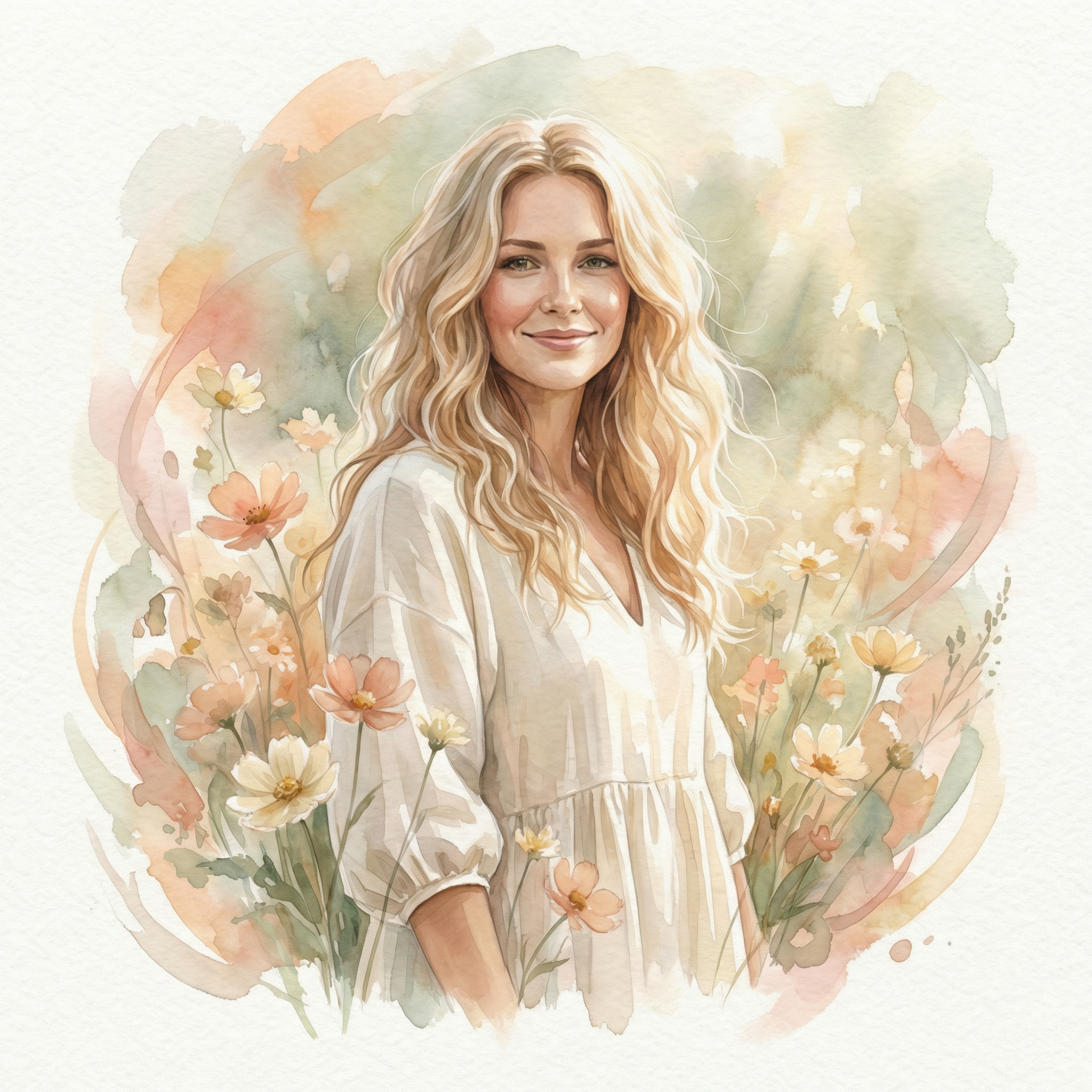
Kaia Lirien portrait watercolor

Kaia Lirien is not just a name—it’s a muse sculpted of paper and petal. Kaia means “earth” and renewal; Lirien comes from the Celtic lir, meaning “sea.” Together, they speak of balance—root and tide, soil and song.

She writes what wildflowers would if they had ink—melodic, quiet, steeped in sunlight. Every story carries the fragrance of Earth’s Flowers, her natural soap and art brand, hand‑made like her words.

“From earth to ink, Kaia Lirien brings wild grace to every creation—reminding us that nature breathes art, and art breathes life.”

Find her poetry blooming through PrintingYourArt.com and her reflections here on WhimsOfWriting.com—two petals of the same creative garden.

— Kaia Lirien 🌸

© 2026 Whims of Writing • Art & Nature in Bloom

🌿 Meet Kaia Lirien – The Whimsical Muse Behind Earth’s Flowers

Kaia Lirien portrait with watercolor tones

Some names sound like music, others bloom like petals. Kaia Lirien does both. She is the soft heartbeat behind Earth’s Flowers—a creative name that sways between sunlight and story, brushstroke and scent.

Her name, “Kaia Lirien,” carries deep roots:
Kaia means “earth” or “pure life,” a grounding source of renewal.
Lirien comes from lir, Celtic for “the sea,” paired with “‑ien,” meaning “of or belonging to.”
Together, they form harmony—root and wave, soil and tide, stillness and motion.

Kaia is a free‑spirited artist and writer whose creativity glows in watercolor shades of peach and cream. She paints in the quiet between daylight and dream, writing stories that drift like wildflower seeds under summer skies.

As the poetic voice of Earth’s Flowers, Kaia celebrates the art of slow, purposeful creation. Each handcrafted soap and each soft verse reflect her simple truth—beauty and nature live best side by side.

Her dreamy imagery lives on PrintingYourArt.com, while her musings meander through WhimsOfWriting.com—where words and watercolors meet in gentle whirls of inspiration.

“Kaia paints morning mist, writes about dew, and celebrates the quiet joy of living in tune with the earth.”

— Flourishing in light and ink,
Kaia Lirien

© 2026 Whims of Writing • Art, Nature & Words in Bloom

Sunday, January 25, 2026

The Roots of Color: A Southern Tale of Red, Blue, and Yellow


A cozy southern still-life featuring red, blue, and yellow pigments.

Discover the story of the three primary colors — red, blue, and yellow — told with southern charm. Learn their history, how they were made, and how light and shadow change their character.


The Beginning: When Color Came from the Earth

Long before paint came in shiny cans or digital screens shimmered with pigments, colors were made by hand. Folks down South — and across the world — would grind up bits of stone, clay, or plants. They’d boil berries or roots on stovetops, stirring like they were making Sunday jam.

That’s how red, blue, and yellow — the grand trio of all colors — came to life. These primaries are the kinfolk that give birth to every other hue, from grassy greens to royal purples. Each one carries a spirit, a temperament, and a story to tell.


Red: The Fire in the Heart

Red’s the bold one, full of spirit and sass. In olden days, folks made red from clay rich in iron or from crushed cochineal beetles — a tiny bug with a mighty bite of color.

Red shows up in Southern life everywhere: rust-colored barns baking in summer sun, fresh tomatoes shining in a basket, and that lipstick shade that says, “I got this.”

But red’s mood changes with light and shadow. Mix it with white, and it softens into pink — sweet and tender like a magnolia bloom. Add black, and it deepens into burgundy or maroon — the color of old wine, patience, and quiet pride.


Blue: The Quiet Soul

Blue don’t boast. It speaks slow, like an old river on a windless afternoon. Back in the day, indigo plants painted the South in fields of twilight blue. Folks would crush and ferment them into dye for clothing that carried the scent of hard work and warm nights.

Lighten blue with white, and you get airy sky colors — soft as morning light slipping through lace curtains. Darken it with black, and it becomes navy, midnight, or storm — the deep tones of denim worn by generations and the horizon before the rain.


Yellow: The Sunshine Maker

Yellow’s the life of the bunch — bright, easygoing, and always hummin’ a tune. Early pigments came from ochre, saffron blossoms, or clay baked golden by the sun.

It’s the color of cornbread drippin’ with honey, wildflowers dotting an open field, and that first slant of morning light through the kitchen window.

Mix it with white, and it turns to cream — gentle as butter on warm biscuits. Stir in black, and you’ll find mustard — baked-in warmth, sturdy and grounded, like old paint on a well-loved porch.


When Colors Meet

Here in the South, we know that family traits run strong — and when these colors mingle, something new is born.

  • Red and yellow make orange — bold as a summer sunset.
  • Blue and yellow give you green — the eternal song of life and growth.
  • Red and blue create purple — deep as twilight and full of mystery.


And just like Southern storytelling, every mix is a little unpredictable — rich with character, shaped by balance and light.


The Heart Behind the Hue

Colors aren’t just what we see; they’re what we feel. They shape our days, calm our nerves, and stir up memories. Red’s for passion and courage. Blue carries peace and promise. Yellow brings warmth and joy.

The old painters and homemakers who ground their colors by hand knew this well: color is a living thing, born of earth, light, and patience — just like all good Southern things.

So next time you watch a Texas sunrise stretch over golden fields, remember — it’s just red, blue, and yellow, tellin’ their story one shade at a time.


Author’s Note:
Written with a Southern heart and the belief that every color has a soul — if you just take the time to look.

Keywords: primary colors, color history, red, blue, yellow meaning, southern storytelling, color mixing, art and design

Wednesday, December 17, 2025

Merry Christmas 2025

"For unto us a child is born, unto us a son is given: and the government shall be upon his shoulder: and his name shall be called Wonderful, Counseller, The mighty God, The everlasting Father, The Prince of Peace." 

Isaiah 9:6

Poem Template

A Whim to Write
On the art of starting again

I have a whim to write so write I will.
Can’t believe I am being this still.

I type and I type to no avail.
I can’t believe it, so I guess I will.

What says the key — can it really be
an a or a y? I really can’t say why.

I have a whim to write, so write I will.
When night time comes, I pick up my quill.

Some say I’m lazy and others say naught.
When I sit here and write, I’m not such a snot.

I love the sound of the keys that clank,
or the pen that strikes as I sit down to write.

Well here we go again, picking up where we left off —
not quite sure what to write, but at least it’s a start.

Good night my protagonist.
It was good to see you again.
I’ll finish your scene without you letting out a scream.

The days are long and the nights too short.
I’ll finish your story sometime in the morning.

With coffee brewed and in the mood,
I’ll pick up where we left off,
and again we will start.

— Written in 2015

Featured Post

Mazzy The Mermaid Princess by Carol Eliassen

Queen Eldora is banished by her husband the King from her immortal home to live among the human race as a mortal woman. A miracle occurs ...